
TL;DR
Biomaterials, Thermodynamics, Polymer thermodynamics, Artificial blood, Hemoglobin-based oxygen carrier, Fibrinogen, Hemostat, Disordered proteins, Scattering
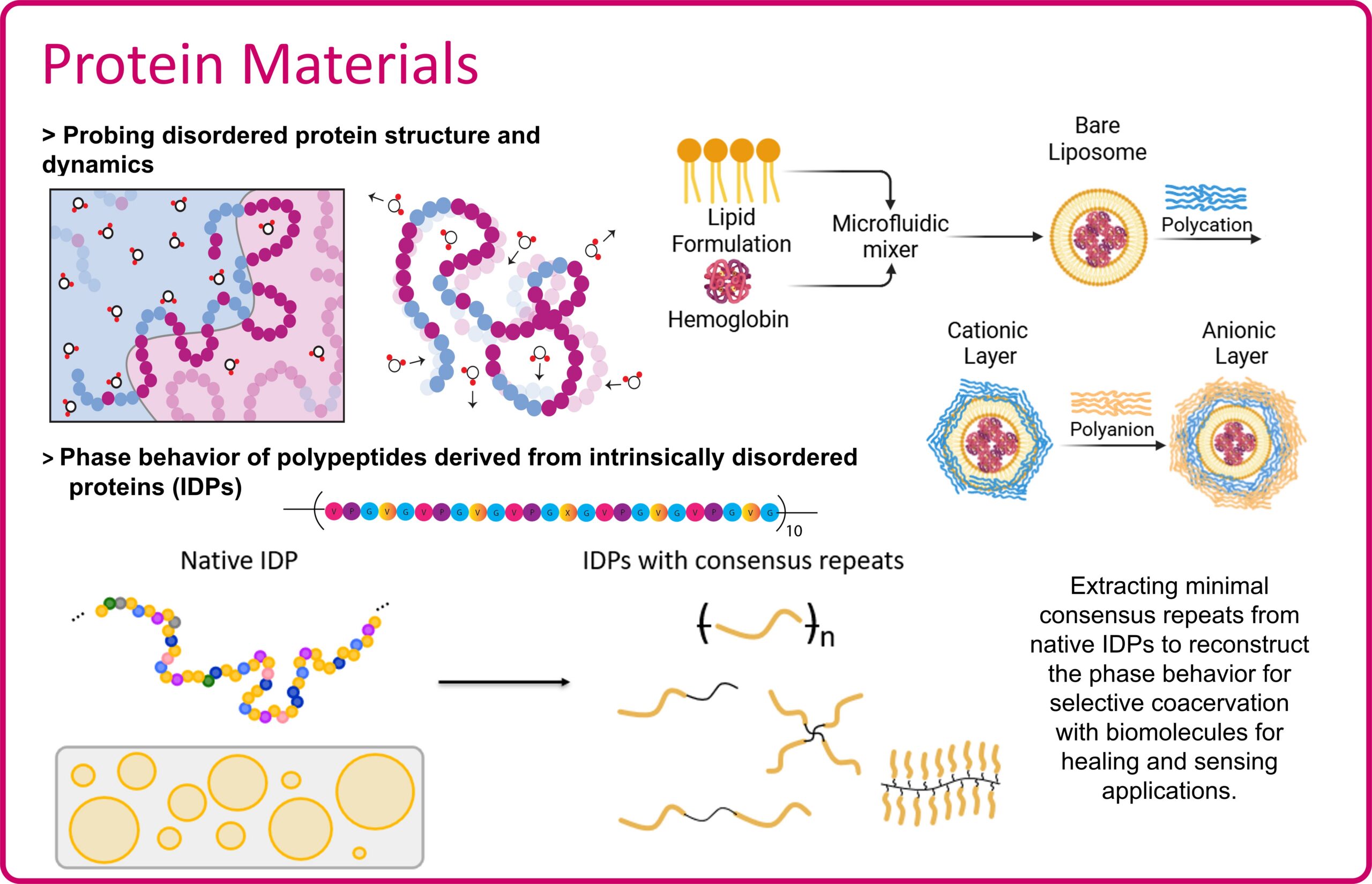
Selected Papers
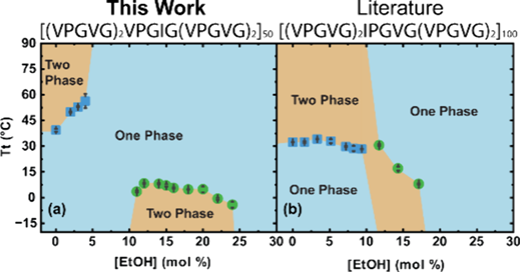
The study investigates how amino acid sequence, hydrophobicity, and charge affect the cononsolvency of elastin-like polypeptides (ELPs) in water/ethanol mixtures with varying salt concentrations. Six systematically designed ELPs exhibit four common phase-behavior regimes as ethanol concentration increases: LCST-like phase separation, a homogeneous region, UCST-like phase separation, and finally complete miscibility. Even ELPs with identical overall amino acid composition can show substantially different phase behavior when their sequence arrangement and molecular weight differ. The results demonstrate that ELP cononsolvency is strongly sequence-dependent, while also revealing a broadly shared cononsolvency pattern among uncharged ELPs across both hydrophobic and hydrophilic sequences.
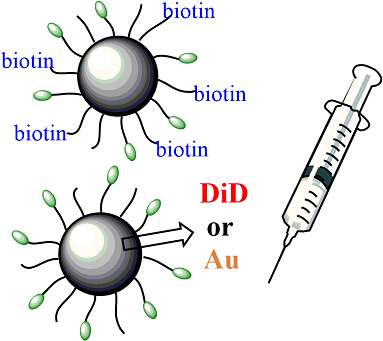
This study develops injectable hemostatic polymer nanoparticles that both treat and help locate internal bleeding. The nanoparticles were modified with imaging tracers, including a fluorescent dye, biotin, and gold nanoparticles, enabling detection by near-infrared imaging, immunohistochemistry, and CT, respectively. In a rodent model of severe liver injury, the particles preferentially accumulated at the bleeding site and were detectable using these imaging methods, while also improving survival. The work therefore demonstrates a theranostic nanoparticle platform that combines hemorrhage control with diagnostic localization, potentially helping first responders stabilize patients and allowing clinicians to identify otherwise unknown sites of internal bleeding using standard imaging techniques.
A review of treatments for non-compressible torso hemorrhage (NCTH) and internal bleeding
Non-compressible torso hemorrhage (NCTH) is a major cause of preventable death, yet existing treatments such as fluid resuscitation, vessel-occluding foams, and fibrin sealants remain limited. This review surveys both current clinical approaches and emerging biomaterial-based therapies, including hemostatic sponges, self-assembling peptides, in situ crosslinking hydrogels, and intravenously administered nanoparticles. It compares their mechanisms and effectiveness across different injury and animal models using key outcomes such as survival, bleeding time, and blood loss. By organizing these technologies and evaluation metrics side-by-side, the review aims to clarify the current landscape of NCTH treatment and support the development of safer and more effective therapies for internal bleeding.
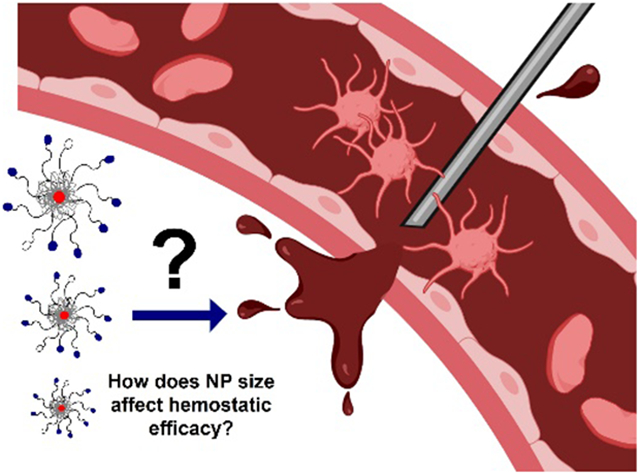
This study examines how nanoparticle size controls the effectiveness of intravenously administered hemostatic nanoparticles for treating internal bleeding. GRGDS-functionalized polymer nanoparticles ranging from <100 to ~500–650 nm were compared for platelet interactions, circulation, biodistribution, and survival in a lethal inferior vena cava injury model. Small particles interacted with more platelets per particle mass and circulated longer, whereas large particles accumulated more strongly on platelet/collagen surfaces but showed substantial pulmonary accumulation. Intermediate-sized nanoparticles (~140–220 nm) produced platelet-rich aggregates, effectively targeted the injury, and gave the strongest improvement in survival. Overall, the study identifies particle size as a key design parameter and suggests that balancing platelet recruitment with prolonged circulation is critical for optimizing systemic nanoparticle hemostats.
Structural Heterogeneity and Hydrodynamics of an Intrinsically Disordered Protein Condensate
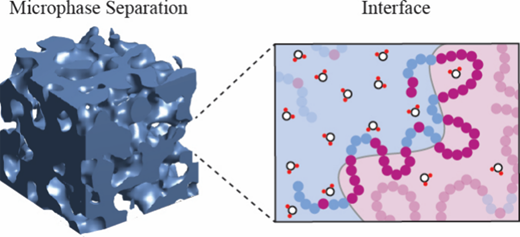
Neutron scattering reveals how the intrinsically disordered N-terminal domain of Galectin-3 organizes and moves in dilute and condensed phases. In dilute solutions, proteins exist as individual chains and mesoscopic clusters, behavior accurately captured by coarse-grained polymer models. At high concentrations, proteins self-assemble like block copolymers, forming a bicontinuous, microemulsion-like condensate through hydrophobic-domain aggregation. Despite a 25-fold concentration increase, the condensate remains fluid-like, with internal dynamics slowing only threefold. These findings provide molecular-level insight into how disordered proteins create biomolecular condensates that combine structural complexity with dynamic fluidity.
Anomalous Self-Diffusion and Sticky Rouse Dynamics in Associative Protein Hydrogels
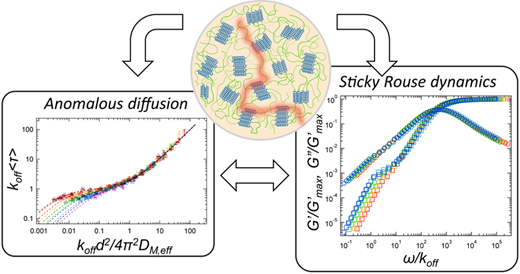
Associating polymer networks exhibit complex, multiscale relaxation behavior. Using forced Rayleigh scattering, this study finds anomalous self-diffusion in protein hydrogels caused by proteins switching between freely diffusing and network-associated states. A two-state model quantitatively describes this behavior, with diffusion in the associated state driving superdiffusion. Dissociation times measured by diffusion are 2–3 orders of magnitude longer than rheological measurements because diffusion reflects complete molecular disengagement from the network. Rheology also reveals long-time, sticky Rouse-like relaxation involving collective protein motion. These findings demonstrate a hierarchy of dynamics linking molecular bonds, individual proteins, and the overall network.
People
- Brian Carrick
- Hannah Uhl
- Zhi Kai Tio
- Zixian Cui